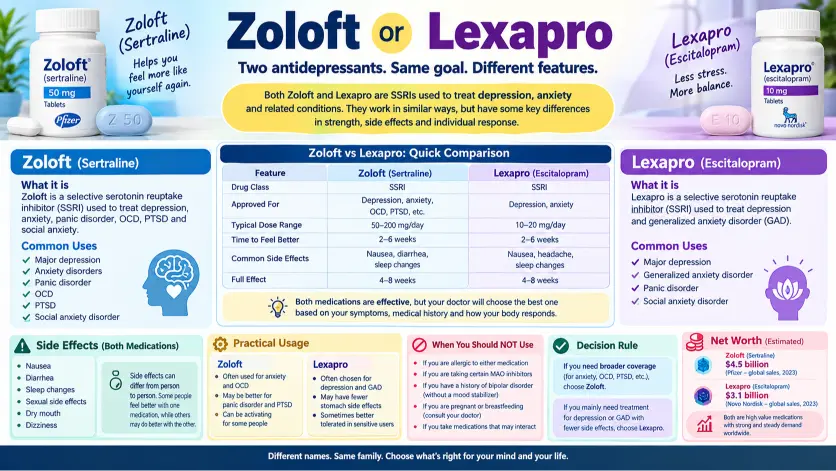
Choosing between Zoloft or Lexapro can raise important questions, especially for people exploring treatment options for depression or anxiety. Both medications are widely prescribed antidepressants, and both belong to a class of medicines called selective serotonin reuptake inhibitors (SSRIs). However, they are not identical. They have different approved uses, potential side effects, precautions, and individual treatment considerations. Understanding these differences can help you have a more informed conversation with your healthcare professional. Although both medications may help improve mental health symptoms, neither is automatically the better choice for every person.
Zoloft is the brand name for sertraline, while Lexapro is the brand name for escitalopram. Both work by affecting serotonin signaling in the brain, but their approved indications differ. For example, sertraline is approved in the United States for conditions including major depressive disorder, panic disorder, post traumatic stress disorder, social anxiety disorder, obsessive compulsive disorder, and premenstrual dysphoric disorder. Escitalopram is approved for major depressive disorder and generalized anxiety disorder in the United States. A clinician considers the diagnosis, medical history, other medications, previous treatment experiences, and possible adverse effects when recommending either option.
In this guide, you will learn how Zoloft and Lexapro compare in terms of uses, effectiveness, common side effects, dosage considerations, and safety precautions. You will also discover which questions to discuss with your prescriber before starting or changing treatment. The goal is to provide a clear, evidence informed overview based on established medication information, not to replace individualized medical advice. Never start, stop, or switch antidepressants without consulting your healthcare professional, because changes may cause withdrawal symptoms or other complications.
Zoloft vs Lexapro: What’s the Difference?
Zoloft and Lexapro are brand names for two different prescription medications that affect serotonin signaling in the brain. Although both are SSRIs, they aren’t identical, and neither medication is universally better for every person.
Zoloft contains sertraline, while Lexapro contains escitalopram. Both are prescribed for major depressive disorder, although their other approved uses differ. In the United States, sertraline is also approved for conditions including obsessive compulsive disorder, panic disorder, post traumatic stress disorder, social anxiety disorder, and premenstrual dysphoric disorder. Escitalopram is approved for major depressive disorder and generalized anxiety disorder.
Consequently, the most appropriate option depends on the condition being treated, previous medication experiences, other health considerations, possible interactions, and the person’s response to treatment.
What Is Zoloft?
Zoloft (sertraline) is a prescription antidepressant classified as an SSRI. It works by inhibiting serotonin reuptake, thereby increasing the availability of serotonin in the spaces between nerve cells.
Clinicians prescribe sertraline for depression and several anxiety related conditions. It may also be considered when obsessive thoughts, compulsive behaviors, panic attacks, or trauma related symptoms require treatment.
Nevertheless, Zoloft can cause side effects, including nausea, diarrhea, sleep disturbances, sweating, and sexual difficulties. Some effects improve as the body adjusts, while others may persist and require a discussion with the prescriber.
What Is Lexapro?
Lexapro (escitalopram) is another prescription SSRI. It is used to treat major depressive disorder and generalized anxiety disorder in the United States.
Like sertraline, escitalopram affects serotonin reuptake. However, the two medications differ in their pharmacological properties, dosing instructions, side effect patterns, and approved indications.
Potential side effects include nausea, headache, sleep changes, sweating, and sexual difficulties. Furthermore, escitalopram can affect the electrical activity of the heart in certain circumstances, particularly at higher exposures or when other risk factors are present.
Neither medication should be started, stopped, or adjusted without appropriate medical guidance.
Zoloft and Lexapro Comparison Table
| Feature | Zoloft | Lexapro |
|---|---|---|
| Generic name | Sertraline | Escitalopram |
| Medication class | SSRI | SSRI |
| Depression treatment | Yes | Yes |
| Generalized anxiety disorder | Not a US FDA approved indication | Yes |
| OCD | Yes | Not a US FDA approved indication |
| Panic disorder | Yes | Not a US FDA approved indication |
| PTSD | Yes | Not a US FDA approved indication |
| Social anxiety disorder | Yes | Not a US FDA approved indication |
| Common side effects | Nausea, diarrhea, sleep changes, sexual effects | Nausea, sleep changes, sweating, sexual effects |
| Important consideration | Gastrointestinal and sexual side effects | QT interval and heart rhythm considerations |
| Prescription required | Yes | Yes |
Approval information in this table refers to United States FDA indications. Prescribing approvals and clinical practices can differ by country.
Quick Recap
Zoloft contains sertraline, whereas Lexapro contains escitalopram.
Both medications treat depression and may help with anxiety related symptoms.
Their approved uses and potential adverse effects differ.
Therefore, the better choice depends on individual medical needs rather than brand popularity.
Is Zoloft or Lexapro Better for Depression and Anxiety?
Neither medication is consistently the best choice for everyone. Both can reduce depressive symptoms, and both may be used in the management of anxiety related conditions. However, the diagnosis, medical history, previous treatment experiences, and side effect preferences all influence the decision.
Clinical research comparing antidepressants suggests that differences in average effectiveness are often modest, while individual responses can vary considerably. Consequently, a medication that works well for one person may be less suitable for another.
Which Is Better for Depression?
Both sertraline and escitalopram are established treatments for major depressive disorder. The choice often depends on previous treatment response, other symptoms, medication interactions, and tolerability.
For example, someone who has previously responded well to sertraline may have a reason to continue with it. Conversely, a person who experienced troublesome effects with another medication may discuss escitalopram as an alternative.
Importantly, neither medicine provides immediate relief. Some people notice early changes within the first couple of weeks, although meaningful improvement often takes several weeks. Full benefits may take longer, depending on the person and the condition being treated.
Which Is Better for Anxiety?
Both medications may help with anxiety, although their approved indications differ.
Lexapro is approved in the United States for generalized anxiety disorder. Zoloft is approved for several other anxiety related conditions, including panic disorder and social anxiety disorder.
Therefore, the type of anxiety matters. Someone experiencing persistent, widespread worry may have different treatment considerations from someone experiencing panic attacks, intrusive thoughts, or trauma related symptoms.
Nevertheless, approval status alone doesn’t establish which medicine will work best for an individual. A clinician should assess the symptoms, relevant medical history, and treatment goals before recommending an option.
Common Side Effects of Zoloft and Lexapro
Both medications can cause side effects because they influence serotonin signaling. However, the severity and duration of these effects vary from person to person.
The following comparison describes possible effects, not a prediction of what any individual will experience.
| Side effect | Zoloft | Lexapro |
|---|---|---|
| Nausea | Common | Common |
| Diarrhea | Particularly relevant | Possible |
| Headache | Possible | Possible |
| Sleep changes | Possible | Possible |
| Sweating | Possible | Possible |
| Sexual difficulties | Possible | Possible |
| Weight changes | Possible over time | Possible over time |
| Initial restlessness | Possible | Possible |
Sertraline is often associated with gastrointestinal effects, particularly diarrhea or nausea. Escitalopram can also cause nausea and other digestive symptoms, along with tiredness, sleep changes, or sexual difficulties.
Additionally, sexual side effects can include reduced libido, delayed orgasm, or difficulty reaching orgasm. These effects may continue even when other symptoms improve, so discussing them with a prescriber is important.
Some early adverse effects settle after the body adjusts to treatment. However, persistent, severe, or disruptive symptoms deserve medical review rather than being ignored.
Serious Risks and Important Safety Differences
Although both medicines are widely prescribed, neither is risk free. Understanding their precautions helps patients make informed decisions with their healthcare professionals.
Heart Rhythm Considerations
Escitalopram can prolong the QT interval, an electrical measurement of the heart’s recovery between beats. In susceptible individuals, this can increase the risk of a potentially serious abnormal rhythm.
The concern is particularly relevant for people with certain heart conditions, low potassium or magnesium levels, or other medicines that affect heart rhythm. Sertraline can also require caution in people with QT related risk factors, although the clinical considerations differ.
Consequently, a clinician may review other medications, medical history, and relevant tests before choosing treatment.
Serotonin Syndrome
Both medicines can contribute to serotonin syndrome, a rare but potentially dangerous reaction involving excessive serotonin activity.
Symptoms may include agitation, confusion, sweating, fever, rapid heartbeat, tremor, and muscle stiffness. The risk can rise when serotonergic medicines are combined, including certain antidepressants, migraine treatments, or other interacting substances.
Seek urgent medical attention if symptoms suggest serotonin syndrome, especially when several symptoms develop together after starting a medication or changing a dose.
Mood Changes and Suicidal Thoughts
Antidepressants carry a warning about an increased risk of suicidal thoughts and behaviors in children, adolescents, and young adults, particularly during treatment initiation or dose changes. Close monitoring is important for people of all ages, especially when symptoms worsen.
In addition, both medicines may trigger mania or hypomania in susceptible individuals. A history of bipolar disorder or episodes of unusually elevated mood should therefore be discussed before treatment begins.
If suicidal thoughts emerge or intensify, seek immediate professional help. If there is imminent danger, contact local emergency services.
Zoloft vs Lexapro: Dosage and How Long They Take to Work
Both medicines are generally taken once daily, but their prescribed doses differ. The correct amount depends on the condition, age, other medications, response, and individual risk factors.
Zoloft tablets are available in several strengths, while Lexapro is commonly supplied in 5 mg, 10 mg, and 20 mg tablets in the United States. These figures describe available tablet strengths, not a recommendation for an individual patient.
A prescriber may begin with a lower dose and adjust it gradually when appropriate. Never increase the amount simply because improvement seems slow.
How Long Does Each Medication Take to Work?
Some people notice changes in sleep, appetite, energy, or anxiety within the first few weeks. However, these early changes don’t necessarily mean that the full antidepressant effect has developed.
Meaningful improvement commonly takes several weeks, and a fuller assessment may require additional time. The exact timeline depends on the diagnosis, prescribed dose, consistency of use, and individual response.
Therefore, patients should attend follow up appointments and report both benefits and unwanted effects. If improvement remains limited, a clinician can reassess the treatment plan rather than assuming one medication is automatically superior.
When You Should Not Choose or Switch Between These Medications Without Guidance
Although both medicines are established treatments, certain circumstances require additional care.
1. When taking interacting medicines. Don’t combine either antidepressant with another serotonergic medicine without professional review.
2. When you have a heart rhythm condition. Discuss your medical history before taking escitalopram, particularly if you’ve been told you have a prolonged QT interval.
3. When bipolar disorder is suspected. A history of mania or hypomania can change the treatment approach.
4. When pregnant or planning pregnancy. Discuss the benefits and risks of treatment with your healthcare professional rather than stopping medication abruptly.
5. When side effects become severe. Persistent vomiting, significant agitation, or other concerning symptoms require prompt assessment.
6. When symptoms worsen suddenly. New or increasing suicidal thoughts require immediate attention.
7. When another antidepressant is already being taken. Switching requires a clinician’s plan to reduce the risk of interactions or withdrawal symptoms.
8. When treatment seems ineffective after a short period. Don’t increase the dose or combine medicines independently. Discuss the timeline and next steps with the prescriber.
Zoloft and Lexapro in Modern Technology and Digital Healthcare
Digital healthcare tools can help people track symptoms, record medication schedules, and prepare for appointments. For example, a symptom diary may record sleep quality, anxiety levels, mood changes, and side effects over several weeks.
However, symptom tracking doesn’t replace clinical judgment. A temporary improvement in mood doesn’t necessarily establish that a medication is working fully, while an isolated difficult day doesn’t automatically mean treatment has failed.
Medication reminder applications can also help reduce missed doses. Nevertheless, if a dose is forgotten, patients should follow the medication instructions or ask a pharmacist rather than automatically doubling the next dose.
Online medication comparisons are useful for learning basic differences. Still, personal treatment decisions require consideration of health conditions, other prescriptions, and individual circumstances.
Where Do the Names Zoloft and Lexapro Come From?
Zoloft and Lexapro are commercial brand names rather than scientific names for different categories of antidepressants.
Zoloft contains sertraline hydrochloride, while Lexapro contains escitalopram oxalate. Their generic names identify the active medicines, which belong to the selective serotonin reuptake inhibitor class.
Sertraline received its initial United States approval in 1991, while escitalopram was first approved in 2002. Both subsequently became widely used prescription treatments for depression and selected anxiety related conditions.
The distinction matters because brand names can vary by country, and generic versions may be sold under different labels. Therefore, checking the active ingredient on the package is more reliable than relying on brand recognition alone.
A Clinical Perspective on Choosing an Antidepressant
A useful principle in prescribing is to match the treatment to the person’s symptoms, history, preferences, and safety considerations.
As a general clinical principle:
“The most suitable antidepressant is one that provides meaningful symptom relief with acceptable side effects and a manageable treatment plan.”
This is a general summary of individualized prescribing, not a quotation attributed to a particular physician.
For instance, a person who needs treatment for a condition specifically covered by sertraline’s approved indications may have different options from someone seeking treatment for generalized anxiety disorder. Likewise, someone with particular heart rhythm risks may need a different assessment from someone without those concerns.
Ultimately, a prescription should reflect the complete clinical picture rather than a simple ranking of two brands.
Two Illustrative Patient Scenarios
The following examples demonstrate how clinicians might approach treatment decisions. They are hypothetical scenarios, not real patient records or proof that one medication produces better outcomes.
Case Study 1: Depression With Persistent Digestive Side Effects
A fictional patient begins treatment for depression and experiences persistent digestive discomfort. Although mood symptoms gradually improve, the gastrointestinal effects interfere with daily activities.
During a follow up appointment, the patient describes the timing and severity of the symptoms. The clinician reviews the dose, other medicines, and the degree of improvement before discussing possible adjustments or an alternative antidepressant.
Outcome: The treatment plan is reassessed around both symptom improvement and tolerability. No automatic switch is made solely because one medicine is perceived as better than another.
Case Study 2: Generalized Anxiety With Heart Rhythm Concerns
A fictional patient seeks treatment for ongoing anxiety and has a history of a heart rhythm problem. The clinician reviews the diagnosis, current prescriptions, relevant medical records, and potential medication interactions.
Because escitalopram can affect the QT interval, the clinician considers whether this risk is important for the patient. Sertraline and non medication approaches may also be discussed, depending on the overall assessment.
Outcome: The final plan prioritizes appropriate anxiety treatment while accounting for cardiovascular safety rather than choosing a medicine based on popularity alone.
These scenarios illustrate why individual assessment is essential. They don’t establish a universal winner between Zoloft and Lexapro.
Error Prevention Checklist
Before beginning treatment or discussing a change, use this checklist to prepare for a healthcare appointment.
Always Discuss These Points
- The main condition being treated, including depression, generalized anxiety, panic symptoms, or obsessive thoughts.
- Previous antidepressant use and whether it helped.
- Current prescriptions, over the counter medicines, and supplements.
- Relevant heart conditions, bipolar disorder history, and other important medical concerns.
- Side effects that would significantly affect daily life.
- How progress will be reviewed and when a follow up appointment should occur.
Never Do These Things Without Medical Guidance
- Stop either medication suddenly.
- Take both medicines together simply to improve results.
- Change the prescribed dose independently.
- Share prescription medication with another person.
- Assume that similar drug classes mean identical safety profiles.
- Ignore new suicidal thoughts, severe agitation, or symptoms suggesting a serious reaction.
Both sertraline and escitalopram can cause discontinuation symptoms when stopped too quickly. A prescriber can develop a gradual reduction plan based on the dose, treatment duration, and individual response.
Related Medication Comparisons Worth Understanding
Learning about other medication differences can help patients ask more informed questions during consultations.
- Sertraline vs escitalopram: The active ingredients in Zoloft and Lexapro.
- SSRIs vs SNRIs: Two antidepressant classes with different effects on serotonin and norepinephrine.
- Fluoxetine vs sertraline: A comparison of two commonly prescribed SSRIs.
- Citalopram vs escitalopram: Two related medicines with distinct prescribing considerations.
- Antidepressants vs anti anxiety medicines: Different treatment categories that may overlap in their uses.
- Medication vs psychotherapy: Different approaches that may be used separately or together.
- Side effects vs withdrawal symptoms: Unwanted effects during treatment versus symptoms after reducing or stopping a medicine.
- Brand name vs generic medicine: The difference between a commercial label and its active ingredient.
- Depression vs generalized anxiety disorder: Conditions that can overlap but require careful assessment.
- Starting treatment vs maintenance treatment: Different stages of a medication plan.
These comparisons are educational starting points. A clinician or pharmacist can explain how the distinctions apply to a specific prescription.
Frequently Asked Questions
1. Is Zoloft or Lexapro better for anxiety?
Neither is best for everyone. Lexapro is approved for generalized anxiety disorder in the United States, while Zoloft is approved for several other anxiety related conditions. The most suitable option depends on the specific symptoms, medical history, and response to treatment.
2. Is Zoloft or Lexapro better for depression?
Both are established treatments for major depressive disorder. Individual responses differ, so the decision generally considers previous treatment results, side effects, other medical conditions, and potential interactions rather than assuming one medication is universally more effective.
3. What is the main difference between Zoloft and Lexapro?
Zoloft contains sertraline, whereas Lexapro contains escitalopram. Both are SSRIs, but their approved uses and some safety considerations differ. Sertraline has a broader set of approved indications in the United States, while escitalopram is approved for depression and generalized anxiety disorder.
4. Which has fewer side effects, Zoloft or Lexapro?
There is no universal answer. Both can cause nausea, sleep changes, sweating, and sexual difficulties. Sertraline may be particularly troublesome for some people because of gastrointestinal effects, while escitalopram has specific heart rhythm considerations. Individual tolerability varies.
5. Do Zoloft and Lexapro work immediately?
No. Although some changes may appear during the first few weeks, meaningful improvement commonly takes several weeks, and the full benefit may take longer. Continue following the prescribed plan and discuss concerns with the prescriber.
6. Can you switch from Zoloft to Lexapro?
A switch may be appropriate for some patients, but it requires an individualized plan. The clinician considers the current dose, treatment duration, side effects, and interaction risks. Don’t stop one medication and start the other independently.
7. Can Zoloft and Lexapro be taken together?
They generally shouldn’t be combined unless a specialist has explicitly prescribed and supervised such a plan. Taking multiple serotonergic medicines can increase the risk of serious interactions, including serotonin syndrome.
8. Do Zoloft and Lexapro cause weight gain?
Weight changes are possible with both medicines, although the amount and timing vary. Appetite, activity, symptom improvement, treatment duration, and other factors may contribute. Discuss substantial or distressing changes with a healthcare professional.
9. How do you stop taking Zoloft or Lexapro safely?
A clinician usually recommends gradually reducing the dose rather than stopping suddenly. The schedule depends on the medicine, current dose, duration of treatment, and withdrawal symptoms. Seek medical advice before making changes.
Conclusion:
Choosing between Zoloft or Lexapro requires more than comparing two medication names. Both sertraline and escitalopram can be effective treatments for depression, and each has a role in treating certain anxiety related conditions.
Zoloft has several approved uses, including obsessive compulsive disorder, panic disorder, post traumatic stress disorder, and social anxiety disorder. Lexapro is approved for major depressive disorder and generalized anxiety disorder in the United States. However, their side effects, interactions, and individual responses must also be considered.
Therefore, the best choice is the medicine that suits the person’s diagnosis, medical history, treatment goals, and tolerability. Discuss these factors with a qualified healthcare professional, attend follow up appointments, and never change or stop a prescription without appropriate guidance.









