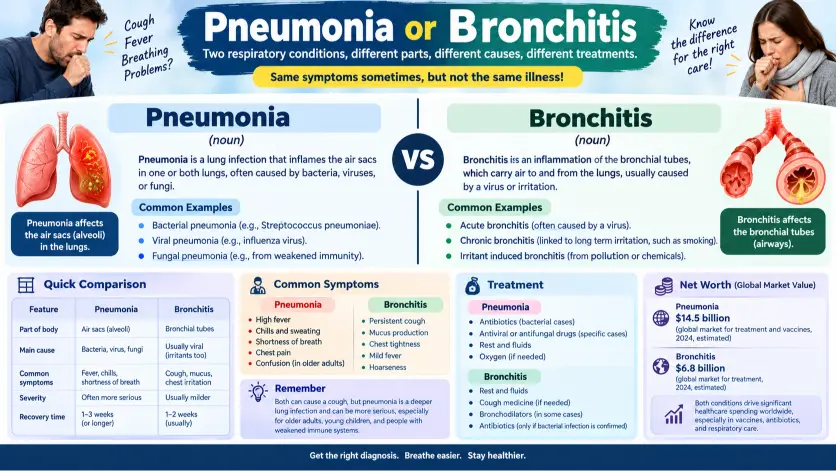
A persistent cough, chest discomfort, or difficulty breathing can leave you wondering whether you have pneumonia or bronchitis. Although these respiratory conditions can share similar symptoms, they affect different parts of the respiratory system and may require different approaches to diagnosis and treatment. Bronchitis involves inflammation of the bronchial tubes that carry air to and from the lungs, while pneumonia affects the air sacs within the lungs. Understanding this distinction is important because symptoms that initially seem like an ordinary chest infection can sometimes indicate a more serious illness.
When comparing pneumonia or bronchitis, pay attention to the overall pattern of symptoms rather than relying on one sign alone. Bronchitis often causes a persistent cough, sometimes accompanied by mucus, chest soreness, and fatigue. Pneumonia may cause cough, fever, chills, shortness of breath, and pain when breathing deeply, although symptoms can vary considerably. A healthcare professional may consider your medical history, examine your breathing, and recommend tests such as a chest X-ray when necessary. Since symptoms overlap, it is not always possible to distinguish these conditions accurately at home.
In this guide, you will learn how pneumonia and bronchitis differ in their causes, symptoms, diagnosis, treatment, and recovery times. You will also discover which warning signs deserve prompt medical attention and why antibiotics are not appropriate for every respiratory infection. The information is intended to support informed health decisions, not replace an individual medical assessment. Seek emergency care for severe breathing difficulty, bluish lips or skin, new confusion, or other signs of a medical emergency. Understanding the differences can help you recognize when home care may be reasonable and when professional evaluation is essential.
Pneumonia vs Bronchitis: What’s the Difference?
Although pneumonia and bronchitis can develop after respiratory infections, their locations and potential complications differ. Pneumonia affects the lung tissue, particularly the air sacs called alveoli, which can fill with fluid or pus. Bronchitis, on the other hand, involves inflammation of the bronchial tubes, often causing persistent coughing and mucus production.
Both conditions can result from viral infections. However, bacteria can also cause pneumonia, and some forms of bronchitis have different causes. Consequently, symptoms alone cannot always establish which illness a person has.
What Is Pneumonia?
Pneumonia is a respiratory illness in which infection causes inflammation in the lungs. As the air sacs become inflamed, fluid or pus may accumulate, making it harder for oxygen to pass into the bloodstream.
Depending on its cause and severity, pneumonia may develop gradually or suddenly. Common symptoms include cough, fever, chills, fatigue, shortness of breath, and chest pain that becomes more noticeable during deep breathing or coughing.
Furthermore, pneumonia can affect people of any age, although older adults, infants, and people with certain chronic illnesses or weakened immune systems face a greater risk of severe complications.
What Is Bronchitis?
Bronchitis occurs when the bronchial tubes become inflamed. These airways carry air between the windpipe and the lungs. When their lining becomes irritated, the body may produce additional mucus, triggering a persistent cough.
Acute bronchitis usually develops after a respiratory infection and commonly improves within a few weeks. Viruses are responsible for most cases, so antibiotics generally do not help uncomplicated acute bronchitis.
Chronic bronchitis is a longer lasting condition characterized by a productive cough over an extended period. It is commonly associated with chronic obstructive pulmonary disease, or COPD, and often requires ongoing medical management.
Pneumonia vs Bronchitis Comparison Table
| Feature | Pneumonia | Bronchitis |
|---|---|---|
| Main affected area | Lung tissue and air sacs | Bronchial tubes |
| Common symptoms | Cough, fever, breathlessness, chest pain | Persistent cough, mucus, chest irritation |
| Typical causes | Viruses, bacteria, certain fungi | Usually viruses in acute cases; irritants in chronic disease |
| Fever | Common, but not always present | Usually absent or mild in uncomplicated acute cases |
| Breathing difficulty | Can be significant | Usually milder in uncomplicated acute cases |
| Diagnostic tests | Examination, sometimes chest X ray and other tests | Often clinical assessment; additional tests when indicated |
| Antibiotics | Sometimes appropriate, depending on the cause | Usually not useful for uncomplicated acute bronchitis |
| Typical recovery | Varies with severity and cause | Acute cases often improve within several weeks |
Quick Recap
Pneumonia affects the air sacs within the lungs, whereas bronchitis affects the airways leading into them.
Both illnesses can cause coughing and fatigue, although pneumonia is more likely to cause significant breathlessness or systemic illness.
Acute bronchitis commonly follows a viral infection and often improves without antibiotics.
Because symptoms overlap, a medical assessment may be necessary to distinguish the two conditions.
Pneumonia or Bronchitis: Symptoms to Watch For
Although the two illnesses share several symptoms, their severity, progression, and effects on breathing can differ. According to the CDC, pneumonia may cause fever, chills, cough, fatigue, chest pain, and shortness of breath. Bronchitis commonly causes a persistent cough, mucus production, throat irritation, and sometimes wheezing.
Common Symptoms of Pneumonia
Pneumonia can produce a range of symptoms, depending on the infection and the person’s general health. Common warning signs include:
- Fever, chills, or sweating.
- A cough that may produce mucus.
- Shortness of breath, even during light activity.
- Chest pain that worsens with breathing or coughing.
- Unusual tiredness or weakness.
- Reduced appetite, nausea, or confusion in some people.
However, not everyone develops a high fever. Older adults, for example, may experience confusion or weakness rather than the typical combination of symptoms. Therefore, an absence of fever doesn’t rule out pneumonia.
Common Symptoms of Bronchitis
Acute bronchitis often begins after a cold or another respiratory infection. Its most noticeable feature is usually a persistent cough, which may produce clear, yellow, or green mucus.
Other symptoms can include a sore throat, a runny nose, mild fever, chest discomfort during coughing, and wheezing. Although the cough can be irritating, uncomplicated acute bronchitis often improves within approximately three weeks.
Importantly, mucus color alone cannot reliably distinguish a bacterial infection from a viral one. Consequently, green or yellow phlegm does not automatically mean antibiotics are necessary.
How Can You Tell Them Apart?
Certain patterns may provide clues, although they cannot confirm a diagnosis.
| Symptom pattern | Possible interpretation |
|---|---|
| Persistent cough following a cold, with mild symptoms | Acute bronchitis may be responsible |
| Fever, chills, breathlessness, and pain during deep breathing | Pneumonia needs to be considered |
| Wheezing and prolonged cough | Bronchitis or another airway condition may be involved |
| Sudden confusion, severe weakness, or worsening breathing | Urgent medical assessment is necessary |
Because symptoms overlap, don’t rely on this table to diagnose yourself. A clinician may need to examine your chest, measure oxygen levels, or arrange further testing.
When You Should Not Assume It Is Just Bronchitis
A persistent cough is often caused by a relatively mild respiratory infection. Nevertheless, pneumonia and other serious illnesses can initially resemble bronchitis. Therefore, recognizing warning signs is important.
Seek prompt medical advice if you experience a worsening cough, ongoing fever, chest pain, coughing up blood, or shortness of breath. Medical assessment is particularly important for infants, older adults, pregnant people, and individuals with chronic heart or lung disease or weakened immune systems.
Seek emergency care immediately if you have severe difficulty breathing, persistent severe chest pain, blue or grey lips, sudden confusion, or difficulty staying awake. In children, rapid or labored breathing and bluish lips also require urgent attention.
Furthermore, don’t wait for a cough to last several weeks if breathing becomes difficult or symptoms deteriorate quickly. The severity and progression of the illness matter more than the duration alone.
Causes and Risk Factors: Pneumonia vs Bronchitis
Understanding the cause helps explain why treatment differs.
What Causes Pneumonia?
Pneumonia can develop when bacteria, viruses, or, less commonly, fungi infect the lungs. The infection triggers inflammation in the air sacs, sometimes allowing fluid or pus to accumulate.
Some cases develop in the community, while others occur during or following a stay in a healthcare facility. The organisms involved and the patient’s existing health conditions influence the course of the illness.
People at increased risk of severe pneumonia include older adults, young children, people with weakened immune systems, and those with certain chronic illnesses. Smoking can also increase respiratory risk. Vaccination, when recommended for an individual’s age and health circumstances, can help prevent some causes of pneumonia.
What Causes Bronchitis?
Acute bronchitis usually develops because of a viral respiratory infection. The infection irritates the bronchial lining, resulting in swelling and mucus production. In some cases, exposure to smoke, dust, fumes, or other irritants can aggravate the airways.
Chronic bronchitis has a different pattern. It is associated with long lasting airway inflammation and is commonly linked to smoking and COPD. Unlike an isolated episode of acute bronchitis, chronic bronchitis may require continuing treatment and monitoring.
Therefore, identifying whether symptoms are acute or chronic is an important part of medical assessment.
Diagnosis: How Doctors Distinguish Pneumonia From Bronchitis
Although a cough may suggest a respiratory illness, symptoms alone aren’t always enough to identify the cause. A healthcare professional will generally ask about the onset of symptoms, fever, mucus, breathing difficulties, medical history, and any recent infections.
Next, the clinician may listen to the lungs with a stethoscope and check breathing rate, temperature, and oxygen saturation.
Tests for Pneumonia
A chest X ray may be recommended when pneumonia is suspected. Depending on the situation, additional investigations can include blood tests, oxygen measurements, or testing a mucus sample to identify an organism.
However, not every patient needs every test. The choice depends on symptom severity, examination findings, risk factors, and whether the diagnosis remains uncertain.
Tests for Bronchitis
Uncomplicated acute bronchitis is often diagnosed through a medical history and physical examination. Additional testing may be necessary if symptoms suggest pneumonia, another respiratory illness, or a complication.
For example, a clinician may consider a chest X ray when breathing difficulties, abnormal examination findings, or other concerning features make pneumonia a possibility.
Consequently, the main diagnostic question isn’t simply whether a person has a cough. Instead, the clinician assesses which condition best explains the complete pattern of symptoms.
Treatment Options for Pneumonia and Bronchitis
Treatment depends on the underlying cause, the severity of symptoms, and the person’s medical circumstances. Therefore, the same remedy isn’t appropriate for every respiratory illness.
How Is Pneumonia Treated?
Treatment for pneumonia depends on whether bacteria, viruses, or fungi are responsible. Bacterial pneumonia generally requires prescribed antibiotics, whereas antibiotics do not treat viral pneumonia. Certain viral infections may benefit from antiviral medicines when appropriate.
Additionally, some patients need oxygen therapy, intravenous fluids, or hospital care if their breathing or oxygen levels become seriously affected. People with mild illness may be treated at home under medical guidance.
Rest, adequate fluids, and appropriate fever relief can support recovery. Nevertheless, prescribed treatment should be followed carefully, and worsening symptoms require reassessment. Recovery varies considerably, with some people improving within a week while others need a month or longer.
How Is Bronchitis Treated?
Most cases of acute bronchitis improve without antibiotics because viruses cause the majority of cases. Supportive care commonly includes rest, drinking enough fluids, avoiding cigarette smoke, and using appropriate medicines to relieve discomfort or fever.
Honey in a warm drink may soothe a cough for adults and children older than one year. However, honey must never be given to infants younger than one year.
People with chronic bronchitis may need a different treatment plan, particularly when COPD is present. Depending on the diagnosis, treatment can include inhaled medicines, smoking cessation support, and regular medical monitoring.
Importantly, don’t take leftover antibiotics or start prescription medicines without professional advice. The correct treatment depends on the actual condition rather than the appearance of the mucus.
Recovery Time: Which Condition Lasts Longer?
Recovery varies from person to person, so there isn’t a single timeline that applies to everyone.
| Recovery factor | Pneumonia | Acute bronchitis |
|---|---|---|
| Early improvement | Depends on cause and severity | Often develops gradually over several days |
| Typical course | May take several weeks or longer | Often improves within about three weeks |
| Lingering cough | Can persist during recovery | May continue after other symptoms improve |
| Medical follow up | Important when symptoms are severe or recovery is delayed | Advisable if symptoms persist beyond three weeks or worsen |
| Main concern | Persistent infection, breathing problems, or complications | Prolonged cough or an alternative diagnosis |
People recovering from pneumonia may continue to feel tired even after their fever improves. Likewise, a bronchitis related cough can linger after the initial infection has settled.
However, symptoms should generally trend toward improvement. If a person develops new breathlessness, renewed fever, worsening chest pain, or increasing weakness, medical reassessment is important.
Pneumonia and Bronchitis in Modern Technology and Digital Health Tools
Digital health services can help people record symptoms, arrange appointments, and follow medical instructions. For instance, a symptom diary may document temperature, cough frequency, breathing discomfort, and changes in energy levels.
Similarly, a pulse oximeter can estimate blood oxygen saturation. Nevertheless, readings may be inaccurate under certain conditions, and a normal reading doesn’t reliably exclude pneumonia.
Online symptom checkers can provide general information, but they cannot replace a physical examination or appropriate diagnostic testing. Consequently, use these tools to support communication with a healthcare professional rather than to make a definitive diagnosis.
Etymology: Where Do Pneumonia and Bronchitis Come From?
The names of these respiratory illnesses reflect their connection to the lungs and airways.
Pneumonia comes through Latin from Greek pneumōn, meaning lung. Its modern medical meaning refers to inflammation of lung tissue, commonly caused by infection.
Bronchitis combines bronchus, referring to an airway in the lungs, with the medical suffix itis, which indicates inflammation. Therefore, bronchitis literally refers to inflammation of the bronchial tubes.
These origins provide a helpful memory aid. Pneumonia primarily concerns the lung tissue and air sacs, whereas bronchitis concerns the airways that transport air into the lungs.
An Expert Perspective on Respiratory Symptoms
A useful principle in respiratory medicine is to evaluate the whole clinical picture rather than relying on one symptom.
“An accurate diagnosis depends on the combination of symptoms, examination findings, risk factors, and appropriate investigations.”
This is a general clinical principle, not a direct quotation attributed to a specific medical professional.
For example, mucus production alone cannot establish whether someone has bronchitis or pneumonia. Instead, clinicians consider fever, breathing difficulties, oxygen levels, medical history, and other findings.
Likewise, a cough that begins after a cold may indicate bronchitis, but worsening symptoms could suggest pneumonia or another complication. Therefore, careful assessment is more reliable than guessing from a single sign.
Two Practical Case Studies
The following examples are illustrative scenarios designed to explain clinical decision making. They are not reports of actual patients or measured research outcomes.
Case Study 1: A Persistent Cough After a Cold
An otherwise healthy adult develops a cough after a common cold. The cough produces mucus, but breathing remains comfortable, and symptoms gradually improve.
A healthcare professional assesses the person’s symptoms and examination findings. If the overall picture supports uncomplicated acute bronchitis, supportive care may be recommended rather than antibiotics.
Outcome: The patient receives guidance on symptom relief, avoiding smoke, and recognizing warning signs. The important result is an appropriate care plan that avoids unnecessary antibiotic use while preserving a clear route for reassessment if symptoms worsen.
Case Study 2: Fever and Increasing Breathlessness
An older adult develops a cough, fever, unusual weakness, and increasing breathlessness. Because these symptoms may indicate pneumonia, a healthcare professional arranges an examination and appropriate investigations, including chest imaging when indicated.
The assessment supports a diagnosis of pneumonia, and treatment is selected according to the suspected cause and illness severity.
Outcome: The patient receives condition appropriate treatment and monitoring rather than being assumed to have uncomplicated bronchitis. This example illustrates why recognizing concerning symptoms and obtaining timely assessment can be important.
Error Prevention Checklist
Before assuming that a respiratory illness is minor, consider the following points.
Always Consider Pneumonia When
• A cough occurs alongside fever, chills, or significant weakness.
• Breathing becomes difficult or increasingly uncomfortable.
• Chest pain worsens when taking a deep breath or coughing.
• Symptoms deteriorate after an apparent improvement.
• An older adult develops sudden confusion or unusual weakness.
These signs don’t prove pneumonia, but they justify appropriate medical assessment.
Never Assume Bronchitis Is Harmless When
• You experience severe breathlessness or persistent chest pain.
• You cough up blood or blood stained mucus.
• Your symptoms worsen rather than gradually improve.
• You have significant underlying heart or lung disease.
• You have a weakened immune system and develop concerning respiratory symptoms.
Seek emergency help for severe breathing difficulty, blue or grey lips, sudden confusion, or difficulty staying awake. Otherwise, contact a healthcare professional promptly when symptoms raise concern.
Related Respiratory Conditions You Should Understand
Several other conditions can resemble pneumonia or bronchitis. Recognizing their basic differences helps explain why medical assessment may be necessary.
1. Common cold: A viral infection that mainly affects the nose and throat, although coughing can also occur.
2. Influenza: A viral illness that can cause fever, body aches, fatigue, and respiratory symptoms. It can sometimes lead to pneumonia.
3. Asthma: A condition involving airway inflammation and narrowing that can cause wheezing, coughing, and breathlessness.
4. COPD: A long term lung condition that includes chronic bronchitis and emphysema.
5. COVID 19: A respiratory illness that can range from mild symptoms to serious lung complications.
6. Pleural inflammation: Inflammation of the lining around the lungs that can cause sharp chest pain during breathing.
7. Tuberculosis: An infectious disease that can affect the lungs and may cause a persistent cough, fever, weight loss, or night sweats.
8. Whooping cough: A contagious bacterial infection that can cause prolonged coughing episodes.
9. Sinusitis: Inflammation of the sinuses that can contribute to mucus drainage and coughing.
10. Pulmonary embolism: A blood clot in the lungs that may cause sudden breathlessness or chest pain and requires emergency assessment.
Although these conditions share some symptoms, their causes and treatments differ. Therefore, a healthcare professional should assess symptoms that are severe, unusual, persistent, or worsening.
Frequently Asked Questions
1. How can you tell the difference between pneumonia and bronchitis?
Pneumonia affects the lung tissue and air sacs, whereas bronchitis inflames the bronchial tubes. Pneumonia may cause fever, chills, chest pain, and significant breathlessness. Bronchitis commonly causes a persistent cough and mucus production. However, symptoms overlap, so examination and sometimes chest imaging are needed.
2. Is pneumonia more serious than bronchitis?
Pneumonia can be life threatening, particularly in older adults and people with underlying illnesses. Acute bronchitis is usually less serious and often resolves without specific treatment. However, chronic bronchitis can cause substantial long term health problems, and any respiratory illness can require urgent care if symptoms become severe.
3. Can bronchitis turn into pneumonia?
Bronchitis doesn’t automatically develop into pneumonia. However, respiratory infections can sometimes progress or occur alongside other infections affecting the lungs. If a cough is accompanied by worsening fever, increasing breathlessness, or new chest pain, seek medical assessment rather than assuming the original diagnosis remains correct.
4. Does pneumonia always cause a fever?
No. Although fever and chills are common, some people with pneumonia have little or no fever. Older adults and people with weakened immune systems may show less typical symptoms, such as confusion, reduced appetite, or unusual weakness. Therefore, the absence of fever doesn’t rule out pneumonia.
5. Does green mucus mean pneumonia or bronchitis?
Green or yellow mucus can occur with several respiratory infections, including bronchitis. Its color alone doesn’t establish whether an infection is bacterial or whether pneumonia is present. Other symptoms, the clinical examination, and appropriate testing provide more useful information.
6. Do antibiotics treat both pneumonia and bronchitis?
Antibiotics treat bacterial infections, including many cases of bacterial pneumonia. However, most uncomplicated acute bronchitis is caused by viruses, so antibiotics generally aren’t helpful. The appropriate treatment depends on the diagnosis and suspected cause. Don’t take antibiotics without medical guidance.
7. How long does bronchitis last compared with pneumonia?
Acute bronchitis often improves within approximately three weeks, although its cough can persist. Pneumonia recovery varies with severity, cause, age, and general health. Some people improve within a week, while others need several weeks or longer. Worsening symptoms should prompt medical reassessment.
8. Can you have pneumonia without coughing?
Yes. Although coughing is common, pneumonia doesn’t always produce the expected symptoms. Some people, particularly older adults, may experience confusion, fatigue, weakness, or breathing difficulties. Therefore, the absence of a cough doesn’t completely exclude pneumonia.
9. When should you go to the hospital for pneumonia or bronchitis symptoms?
Seek emergency medical care for severe difficulty breathing, persistent severe chest pain, blue or grey lips, sudden confusion, or difficulty staying awake. Otherwise, obtain prompt medical advice for worsening breathlessness, coughing up blood, persistent fever, or significant deterioration, especially if you have a higher risk of complications.
Conclusion:
Pneumonia or bronchitis can produce similar respiratory symptoms, yet the underlying conditions affect different parts of the lungs. Pneumonia involves inflammation of the lung tissue and air sacs, whereas bronchitis affects the bronchial tubes and commonly causes a persistent cough.
Although acute bronchitis often improves with supportive care, pneumonia may require antibiotics or other medical treatment depending on its cause. Consequently, the presence of fever, chest pain, worsening breathlessness, or unusual weakness deserves careful attention.
Most importantly, don’t rely on mucus color, cough duration, or the absence of fever to determine the diagnosis. Instead, consider the complete pattern of symptoms and seek medical advice when necessary. If breathing becomes severely difficult or other emergency warning signs appear, obtain immediate medical assistance.









